
Is your teen feeling worried, frustrated, sad or angry?
Could the new social media age restrictions be playing on their minds?
Teenagers and tweens have been immersed in elements of social media for a while now. Especially in “ipad schools” where technology is the third appendage for the pupil. Schools have normalised instant messaging for education purposes. So it’s not hard to imagine that the new social media restrictions could feel like a sucker punch to a generation who has curated a social network on and offline. So why is the government pushing for an age restriction? Let’s look at some numbers.
Cyberbullying statistics:
- 53% of Australian young people have been cyberbullied
- 44% of Australian teens have had at least one negative online experience
- 1 in 3 have experienced online trolling
- 21% have reported online harassment
3 in 4 Australian children and adolescents have viewed harmful content online with 63% reporting viewing content associated with harm online in the last 12 months.
Online predators are active with 226 reports of online child sexual exploitation per day being made to the ACCCE. That’s nearly 7000 reports a month and just under 83, 000 a year!
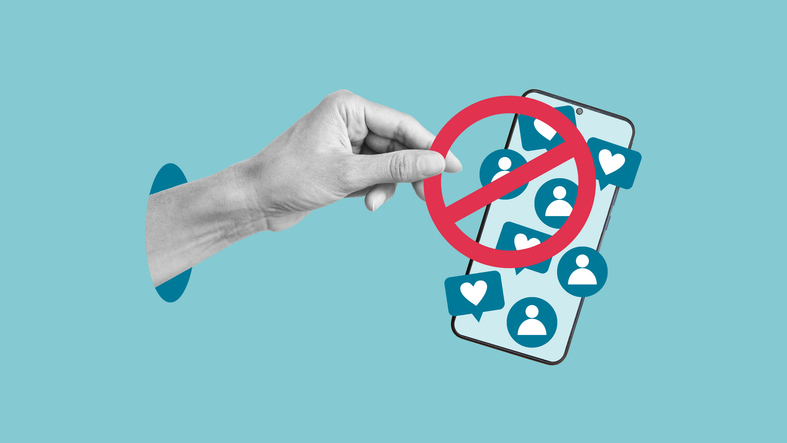
Our government’s intentions have been to protect Australian children and adolescents’ mental health and overall improve their wellbeing through protection from harm, promoting healthy development, addressing online privacy concerns and supporting parents.
- Protection from harm: Protecting children and adolescents from the potential risks of social media, including cyberbullying, viewing harmful content and online predators starts with limiting access to the media platforms. If teens and tweens aren’t online, the potential risks are decreased and quite possibly, we could start to see psychological and emotional wellbeing to increase.
- Promoting healthy development: The age restriction is to delay use of social media until the brain is developed and able to consciously decide how to use social media as a tool rather than a lifestyle adaption. Did you know that there are intentional design features manipulating excessive usage through notifications, alerts and time limited ‘disappearing content’? The social media free environment for under 16 year olds aims to create space for healthy brain development, adequate sleep and optimal concentration for academic performance through interrupting the easy access to social media platforms.
- Addressing online privacy concerns: Oh gosh! How many data leaks has made the news this year? I lost count. If adults struggle to keep their data private, how realistic is it to put the onus on children and teenagers as well? This ban is trying to protect younger users from being exploited by large tech companies who have monetised their personal data.
- Supporting parents: The world of a tween and teen can appear alien to parents. What was “cool” when we were in high school, has probably entered its “cringe” era for current teenagers. And that’s without mentioning the influence of social media. Ensuring tweens and teens are safe online requires vigilance from parents. The social media ban is aiming to empower parents in navigating safe online activity through access limitations.
While these are arguments for why the ban is coming into effect on 10 December 2025, there are some opposing views for the ban. The ban could be an infringement on our Right to Freedom of Expression and Access to Information. The ban could encourage isolation from peers and limit access to online supports. There could be increased privacy risks for all Australians depending on how the age restrictions are carried out by the social media platforms. There is also the reoccurring argument that a blanket ban will not be effective, people will find a way around the restrictions if they want to. Ultimately, concerns focus on the issue of if a social media ban is the most effective way to keep online platforms safe for adolescents and younger children.
Regardless of what we think of the ban, the reality is that it will be in effect on 10 December 2025. How will our young people cope?

Counselling is a great support for young people. This generation appears more comfortable about talking about their feelings and problems than previous generations. And counselling provides a safe space for them to do so. I am a qualified counsellor, with a Master’s specialising in counselling and I have membership with the peak registration body in Australia (PACFA). By investing in a few counselling sessions, you are setting your teen in the best position to adapt to the changes associated with the new social media ban coming into effect on December 10.
To make an appointment with Cassia, you can Book Online. Alternatively, you can call Vision Psychology Brisbane on (07) 3088 5422.
References
Australian Centre to Counter Child Exploitation (ACCCE). (2025). ACCCE statistics. https://www.accce.gov.au/resources/research-and-statistics/statistics
Australian Human Rights Commission (AHRC). (2024). Proposed social media ban for under 16s in Australia. https://humanrights.gov.au/sites/default/files/2024-11/AHRC_Social-Media-Ban-Explainer.pdf
Edith Cowan University. (2023). Cyberbullying in Australia: statistics and resources. https://studyonline.ecu.edu.au/blog/cyberbullying-australia-statistics-resources
eSafety Commissioner. (2025). Social media age restrictions and your family. https://www.esafety.gov.au/parents/social-media-age-restrictions
eSafety Commissioner. (2025). How common is exposure to content associated with harm among children in Australia? https://www.esafety.gov.au/research/the-online-experiences-of-children-in-australia/snapshot-content-associated-with-harm Unicef Australia. Social media ban. https://www.unicef.org.au/unicef-youth/staying-safe-online/social-media-ban-explainer?srsltid=AfmBOop3tU8bMmCohZkl7glfyQFOOk3lM-Ul2FRB7UXZFvvkv6e3sU3U