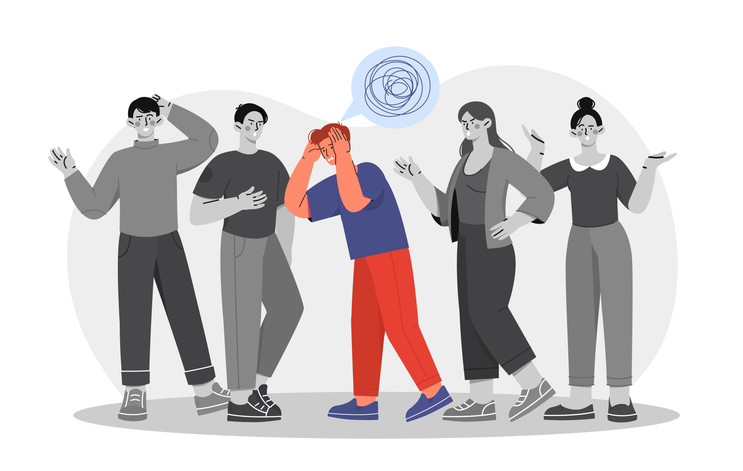
Did you know that our thoughts, feelings and actions are all connected?
This means if I think I am great at singing, I will feel great when I sing and I will choose to sing in front of others regardless of my actually talent. Thankfully for you, I won’t sing in our counselling sessions (it would not be pretty).
The connection between thoughts, feelings and behaviour is particularly helpful to know when living with depression. Depression influences how you see the world and negatively affects your feelings, thoughts and behaviours. The latest statistic shows that around 1.2 million people are living with depression each year in Australia. That is about 1 in every 7 people who will experience depression in their lifetime.
Some common characteristics of depression include:
- Feeling sad, empty, numb or hopeless
- Losing interest in things that used to bring you pleasure
- Changes in appetite and weight
- Sleeping more than usual or not much at all
- Brain fog, forgetfulness, difficulty concentrating
This list is a snapshot of the symptoms of depression and brings awareness to how every day activities start to become difficult to accomplish when living with depression. There are physical, psychological and social factors that impact on depressive tendencies. Therefore, it helps to know that what we feel can be influenced by the actions or thoughts we chose to have.
One way counselling can help manage the symptoms of depression is to apply the CBT triangle to your daily life.
CBT is a well-known theory that utilises the interconnectedness between thoughts, feelings and behaviours to improve overall mental health. It has been successful in promoting inner peace, clearer thinking, strengthening relationships, decreasing anxious thinking and aids in managing stress.
In my counselling sessions, we can start to unpack the unhelpful thought patterns that enables the depressive symptoms to persist. If you find yourself reaching for junk food instead of preparing a nourishing dinner, we can explore why. Is it because it’s the easy option? Is it because you are feeling worthless? Is it creating a shame spiral? Exploring the cause with a trained counsellor can help you identify the cause, and with increase self-awareness, you become empowered to make deliberate choices to change the ending.
I like to think of my role as a counsellor is to be your personal cheerleader that cheers louder than the depression cries. My counselling style encourages you to find the silver lining and promotes personal growth. I like to work in conjunction with a GP. The GP can focus on the medical problems, and we can focus on building your psychological skills. Depression doesn’t need to win.
To make an appointment with Cassia Haase, please Book Online or call Vision Psychology Brisbane on 07 3088 5422.
References
Armstrong, P., Barton, S., Freeman, E., Meyer, T. D., & Wicks, L. (2017). Treating complex depression with cognitive behavioural therapy. The Cognitive Behaviour Therapist. 10(17). doi:10.1017/S1754470X17000149
Australian Bureau of Statistics. (2023). National Study of Mental Health and Wellbeing. https://www.abs.gov.au/statistics/health/mental-health/national-study-mental-health-and-wellbeing/latest-release#:~:text=Support%20Services,-Lifeline:%2013%2011&text=In%202020%E2%80%932022%2C%207.5%25,common%20Affective%20disorder%20(4.9%25).
Health Direct. (2023). Depression. https://www.healthdirect.gov.au/depression
Lundberg, A. L. (2024). The CBT triangle could help improve your mental health. Charlie Health. https://www.charliehealth.com/post/what-is-the-cbt-triangle