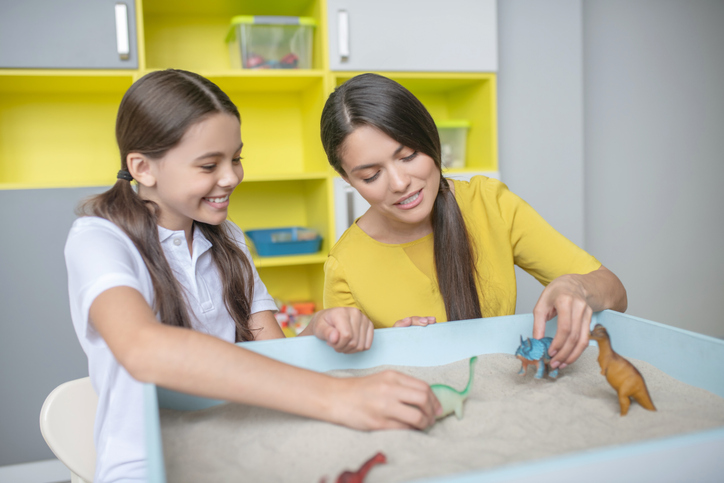
What is Sand Tray therapy?
This interesting expressive therapy uses sand to evoke connection to feelings and the subconscious. A typical set up includes a tray of any depth full of sand alongside a collection of sand tools and/or mini figurines. The sand is soft to touch (not the hard, shelly stuff!). The tools might consist of a mini rake, or brush. These tools tend to be used when practising mindfulness techniques. The mini figurines tend to vary from animals, to fantasy beings, people and nature objects. The idea is that the figurines represent something or someone in your life. Sometimes water is added to the sand tray to add another sensory element.
Sand Tray therapy can be used at any age
You can be 2 or 22 or even 102 years old and sand tray therapy might be the intervention that brings peace and healing to your experience. Here are some examples. Young children (or the young at heart) can create stories in the sand. The therapeutic presence of the counsellor enables their stories to be heard and validated. Adolescents (or the midlife crisis) can explore their identity through harnessing the power of symbolism. A workaholic adult can find peace in the present moment, and an anxious mind can find quiet through activating tactile sensory techniques.
Sand Tray therapy is culturally inclusive
Sand tray therapy has been effectively used across cultures. This intervention is known to be culturally respectful and inclusive. We do not have to be from the same culture for you to find healing from exploring your experience in the sand. Processing painful emotions or experiences can flow through imagery or felt meaning. The need for astute verbal communication becomes irrelevant when using sand tray interventions.
Why Sand Tray therapy works
There is empirical evidence that supports the effectiveness of sand tray therapy. Typically, when using the sand tray to explore experiences; unresolved conflicts and subconscious thoughts are brought to the surface, and the sand tray provides space for safe expression and exploration.
The use of mini figurines with the sand tray puts importance on the symbolism. There is a sort of poetic beauty in how small symbols can represent big emotions. A bully might be represented as a monster. A people pleasing manager might be represented as a baby. These associations tend to also bring the subconscious into awareness. An important step in therapy is growing in awareness because once you are aware of a problem, you can start to address the underlying issues.
By engaging in our senses when working with sand, a secondary effect is emotional regulation where a calmness can arise. Grounding techniques like mindfulness can also be practised by making patterns in the sand with your fingers or the sand tools. Neuroscience shows that the tactile sensory experience from the sand evokes inter-brain synchronization. In layman terms, sand tray interventions promote the therapeutic relationship between you and me (the counsellor). Elements of counselling like empathy are encouraged from this connection.
In summary
There are many benefits that come from using the sand tray in a counselling session. This intervention encourages connection, develops self-expression, builds trust, encourages emotion regulation, promotes inner healing, and increases self-awareness.

Sand tray therapy doesn’t need words. You can explore feelings and memories that are hard to talk about. Curious about using the sand tray intervention in a counselling session? Appointments can be made by contacting reception.
To make an appointment with Cassia Haase, please Book Online or call Vision Psychology Brisbane on 07 3088 5422.
References
Akimoto, M., Ito, J., Kubota, Y., Seiyama, A., & Tanaka, T. (2021). Inter-brain synchronization during sandtray therapy: individual analyses. Frontiers in Psychology. Doi: 10.3389/fpsyg.2021.723211
Chibizhe, P. L. (2016). Identification of play therapy stages in a brief sand-tray process. University of Pretoria. https://repository.up.ac.za/server/api/core/bitstreams/1668d988-c8af-429c-8447-6cbbf1fa81a4/content
Gawish, A., & Main, P. (2024). Sand Tray Therapy: a creative tool for healing and self-expression for therapists, parents and schools. https://www.structural-learning.com/post/sand-tray-therapy
Lesnever, M. (2023). Sandtray therapy through the lens of the expressive therapies’ continuum: helping children who experienced trauma tap into their creative potential. Expressive Therapies Capstone Theses. 714. https://digitalcommons.lesley.edu/cgi/viewcontent.cgi?article=1727&context=expressive_theses