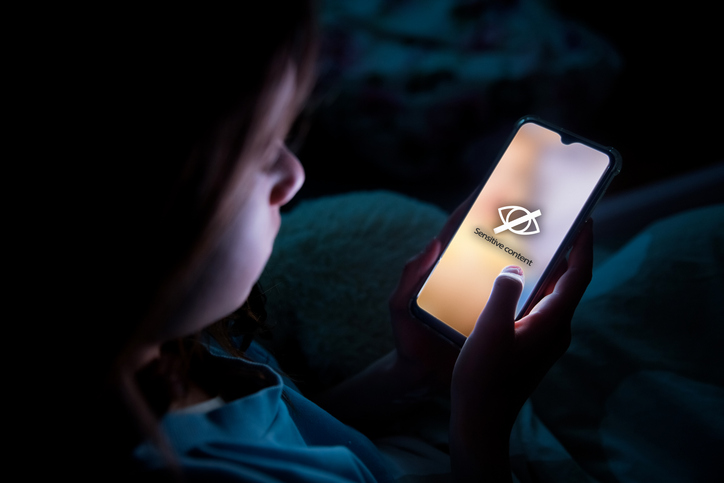
Did you know that:
- 53% of Australian young people have been cyberbullied
- 1 in 3 teens have experienced online trolling
- 3 in 4 teens have viewed harmful content online
- 226 reports of online child sexual exploitation are being made every day (That’s nearly 7 000 reports a month and just under 83 000 a year!)
One of the reasons for the ban is to try and keep you safe online. No one wants you to be bullied, to view harmful content or to be a target for online predators.
There are also online privacy concerns. Big tech companies have monetised collecting personal data. It’s predicted that data brokerage market value for this year (2025) is worth nearly $450 billion dollars (USD). The government wants to protect you from being exploited.
Another reason is that the government is trying to promote your development. One intention of the ban is to delay when you start using social media until your brain can make an informed choice on how you want to use the platforms. Will your social media account become your whole identity, or will you use it as a tool to achieve your goals and maintain your support networks?
This ban is also trying to strengthen family relationships. If mum and dad know you are safe online, there is one less thing to argue about.

How can a few sessions of counselling help you through this time of change?
- Let’s validate your experience and develop strategies to support positive mental health through using an integrated counselling approach.
- Let’s explore your personal experiences using narrative therapy.
- We could explore how the ban is affecting your thoughts, feelings and behaviours through applying CBT skills.
- We could investigate what your emotions are trying to communicate through DBT skills.
- We could also use DBT to increase your tolerance to emotional distress after safety has been established.
- We can use DBT to to increase your resilience and coping skills
- We could strengthen your social skills through stories, role play, building empathy and engaging in collaborative problem-solving. When you feel confident in yourself, engaging in social events face to face becomes less daunting and you might even find you like it.
- In a counselling session, we could explore the options available to you to continue creating connections with friends and having access to online supports.
Time will tell, but so far it looks like there will be some social forums that are exempt from the ban. These include standalone gaming and messaging apps, and apps designed to promote health and education. The age restriction appears to be focusing on limiting you having your own personal social media account. It looks like you will still be able to access the publicly available content on any social media platform (phew!).
The government is trying to create a safer online environment for all Australian youth. Change is never easy, and having non-judgmental support around you as you navigate any change is priceless. If you would like to add a counsellor to your support network, book an appointment with reception.
To make an appointment with Cassia, you can Book Online. Alternatively, you can call Vision Psychology Brisbane on (07) 3088 5422.
References
Australian Centre to Counter Child Exploitation (ACCCE). (2025). ACCCE statistics. https://www.accce.gov.au/resources/research-and-statistics/statistics
Australian Human Rights Commission (AHRC). (2024). Proposed social media ban for under 16s in Australia. https://humanrights.gov.au/sites/default/files/2024-11/AHRC_Social-Media-Ban-Explainer.pdf
Edith Cowan University. (2023). Cyberbullying in Australia: statistics and resources. https://studyonline.ecu.edu.au/blog/cyberbullying-australia-statistics-resources
eSafety Commissioner. (2025). Social media age restrictions and your family. https://www.esafety.gov.au/parents/social-media-age-restrictions
eSafety Commissioner. (2025). How common is exposure to content associated with harm among children in Australia? https://www.esafety.gov.au/research/the-online-experiences-of-children-in-australia/snapshot-content-associated-with-harm
Newmark, W. (2025). Data brokers and data privacy: monetization, regulation, and how they affect consumers. Usercentrics. https://usercentrics.com/knowledge-hub/data-brokers-and-data-privacy-monetization/
Shigley, B. (2025). The role of counselling in navigating life transitions. Indiana Wesleyan University. https://www.indwes.edu/articles/2025/04/the-role-of-counseling-in-navigating-life-transitions
Singh, S., & Taruna. (2013). The role of dialectical behaviour therapy (DBT) in enhancing the distress tolerance and interpersonal effectiveness amongst adolescents. Indian Journal of Positive Psychology. 4(4). https://www.proquest.com/openview/c57d4e5fad49538f288d38ca8396d0e4/1?pq-origsite=gscholar&cbl=2032133
Transform Life. Cultivating social skills: positive behaviour support for peer relationships. https://www.transformlife.com.au/positive-behaviour-support/cultivating-social-skills-positive-behaviour-support-for-peer-relationships/ Unicef Australia. Social media ban. https://www.unicef.org.au/unicef-youth/staying-safe-online/social-media-ban-explainer?srsltid=AfmBOop3tU8bMmCohZkl7glfyQFOOk3lM-Ul2FRB7UXZFvvkv6e3sU3U