The essentials for a good life are getting enough sleep, eating right and exercising regularly. If it’s hard enough to do the essentials, why bother with the extras like self-care? Well, by investing in self-care, you might find that the essentials are easier to achieve.
Did you know that mental health is not the absence of a mental illness? It encapsulates your emotional, psychological and social well-being. Your mental health is just as important as your physical health, and it influences your sense of life satisfaction. Self-care is a non-pharmacological intervention that promotes good mental health and positively impacts your quality of life.
Self-care is the “ability to care for oneself through awareness, self-control, and self-reliance in order to achieve, maintain and promote optimal health and wellbeing.” (Calero et al., 2021). Self-care focuses you onto the things that matter to you. This isn’t you being selfish, this is you prioritising your need to recharge so that you can continue to tackle whatever life demands of you.
Benefits of self-care include:
- Reduces symptoms of stress
- Reductions symptoms of anxiety, depression and trauma
- Increases resilience, your ability to cope in tough situations
- Increases productivity
- Improves mental health
- Decreases risk of illness
- Increases energy levels
- Reduces risk of burnout
The secret to making self-care effective
There is a secret to self-care, for it to achieve the rejuvenating effects we are wanting, the activity has to be a meaningful for you. It has to bring you joy either in the short or long term.
Below is a list of activities to prompt you to invest in your personal self-care. Actual monetary cost varies depending on what you feel comfortable spending. Some activities are free while others cost upwards of $100. The cool thing is that the free activities can have the same effect as the expensive ones. Remember the activity needs to align with your values and bring you joy, not add to your stress.
Self-care activities:
- Buying a cup of coffee
- Going to the movies
- Spending a day at the beach
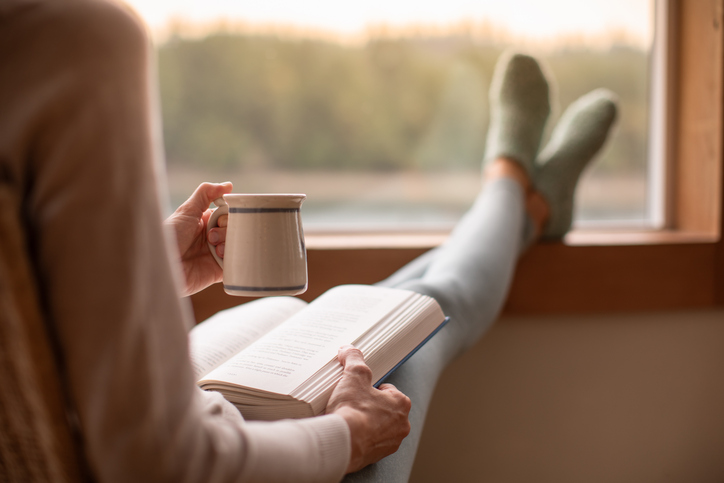
- Read a book
- Bake a cake
- Go for a walk
- See a friend
- Have a DIY spa day
- Get out in the garden
- Practice gratitude
- Start a journal
- Listen to music
- Binge watch a show
- Take a nap
- Listen to a positive podcast
- Learn a new skill
- Play with a pet
- Listen to an audiobook
- Watch an inspirational movie
- Stargaze
- Stay hydrated
- Spend time in nature*
- Play a video game
- Mediation
- Walk barefoot in the grass
- Get a massage
If one doesn’t work for you, try another one. It’s a great idea to have a handful of ideas that work for you.
There are so many more activities that could become your preferred self-care activity, but I was running out of space to write them all. Coming to counselling can facilitate developing a self-care plan that works for you. A counselling session can also explore how to remove the barriers stopping you doing self-care. For example, help you find the time or explore and rewrite negative core beliefs. I encourage you to prioritise self-care so that you can continue to live a full life.
To make an appointment with Cassia, you can Book Online. Alternatively, you can call Vision Psychology Brisbane on (07) 3088 5422.

References
Calero, P., Connelly, C. D., Martinez, N., & Perez, A. (2021). Self-care: a concept analysis. International Journal of Nursing Sciences. 8(4). Doi: https://doi.org/10.1016/j.ijnss.2021.08.007
Black Dog Institute. (n.d). Importance of self-care planning. https://www.blackdoginstitute.org.au/wp-content/uploads/2021/11/Importance-of-selfcare-planning.pdf
National Institute of Mental Health. (2024). Caring for your mental health. https://www.nimh.nih.gov/health/topics/caring-for-your-mental-health
Lifeline. (n.d). Self-care for mental health and well-being. https://toolkit.lifeline.org.au/articles/techniques/self-care-for-mental-health-and-wellbeing